
What another season of putting this off actually costs
A garage door is the heaviest moving object in most homes—often 150 to 400 pounds of wood, steel, or insulated panel riding on springs under enormous tension. When the safety systems on that door are ignored, the failures aren't minor. A broken spring can let a door crash down in a fraction of a second. A misaligned sensor can let a door close on a kid chasing a ball or a dog darting through. These aren't hypothetical scenarios insurance companies invented; they're the predictable result of hardware that wears out and gets skipped during a busy winter. Heading into another Wisconsin winter—when kids and pets spend more time in and around the garage grabbing boots, sleds, and salt-crusted boots—this is the season those gaps get tested.
What actually goes wrong
Garage door accidents involving children and pets tend to fall into a few repeatable patterns:
- Auto-reverse failure. Every modern opener is supposed to stop and reverse if it senses an obstruction. Over time, the force settings drift, the mechanism wears, or the opener is simply old enough that it predates reliable auto-reverse. If it doesn't trigger, a closing door won't stop for a small pet or a child's foot.
- Photo-eye sensors knocked out of alignment or blocked. The two small sensors near the bottom of the track are what tell the door to stop if something breaks the beam. Bumped by a bike, a snow shovel, or a stack of firewood, they drift out of alignment. In winter, road salt residue, condensation, or a crust of ice on the lens can block the beam entirely—sometimes making the door refuse to close at all, sometimes making it close without checking.
- Springs that fail without warning. Torsion and extension springs lose tension gradually, then let go all at once. A spring snapping while the door is in motion can cause it to drop hard or slam. Cold temperatures make steel more brittle, so Racine's hard winters are exactly when spring failures spike.
- Kids and pets getting access to controls. Wall buttons mounted low enough for a toddler to reach, garage remotes left in a parked car, or a keypad code a curious kid figures out—all of these turn a 400-pound door into something a child can operate without understanding the risk.
- Pinch points on older doors. Panel doors made before pinch-resistant designs became standard have gaps between sections that can catch small fingers as the door closes.
How badly this plays out
The injuries tied to these failures are not scrapes. Crush injuries to hands and feet, fractured fingers from pinch points, and in worst cases a door coming down on a child or pet who couldn't get clear in time. Because the door operates in silence and in seconds, there's rarely a warning moment—which is exactly why the prevention has to happen before the door is moving, not during.
The specific actions that prevent it
- Test auto-reverse monthly. Place a roll of paper towels or a 2x4 flat on the ground where the door closes. If the door doesn't stop and reverse on contact, stop using the opener until it's repaired.
- Check the photo-eye beam. Wave a broom handle through the sensor path while the door is closing. It should stop and reverse immediately. Wipe the lenses clean regularly in winter—road salt tracked in on boots and tires builds a film faster than people expect.
- Have springs inspected before deep cold sets in. If your door feels heavier than usual to lift manually, or the opener strains and makes new noises, the springs are losing tension. Don't wait for a full failure.
- Mount wall controls at least five feet up, out of reach of small children, and keep remotes out of parked cars and out of pockets kids can get into.
- Walk the door for pinch points. If you can fit a finger into a gap between panels as the door closes, that's a hazard—especially on older wood or steel doors common on homes throughout Mount Pleasant, Caledonia, and the rest of the area.
- Keep a visual and physical boundary during operation. Teach kids and train pets that the garage door area is a stop-and-wait zone whenever the door is moving, the same way you'd treat a driveway with a car backing out.
When to call Racine Garage Door
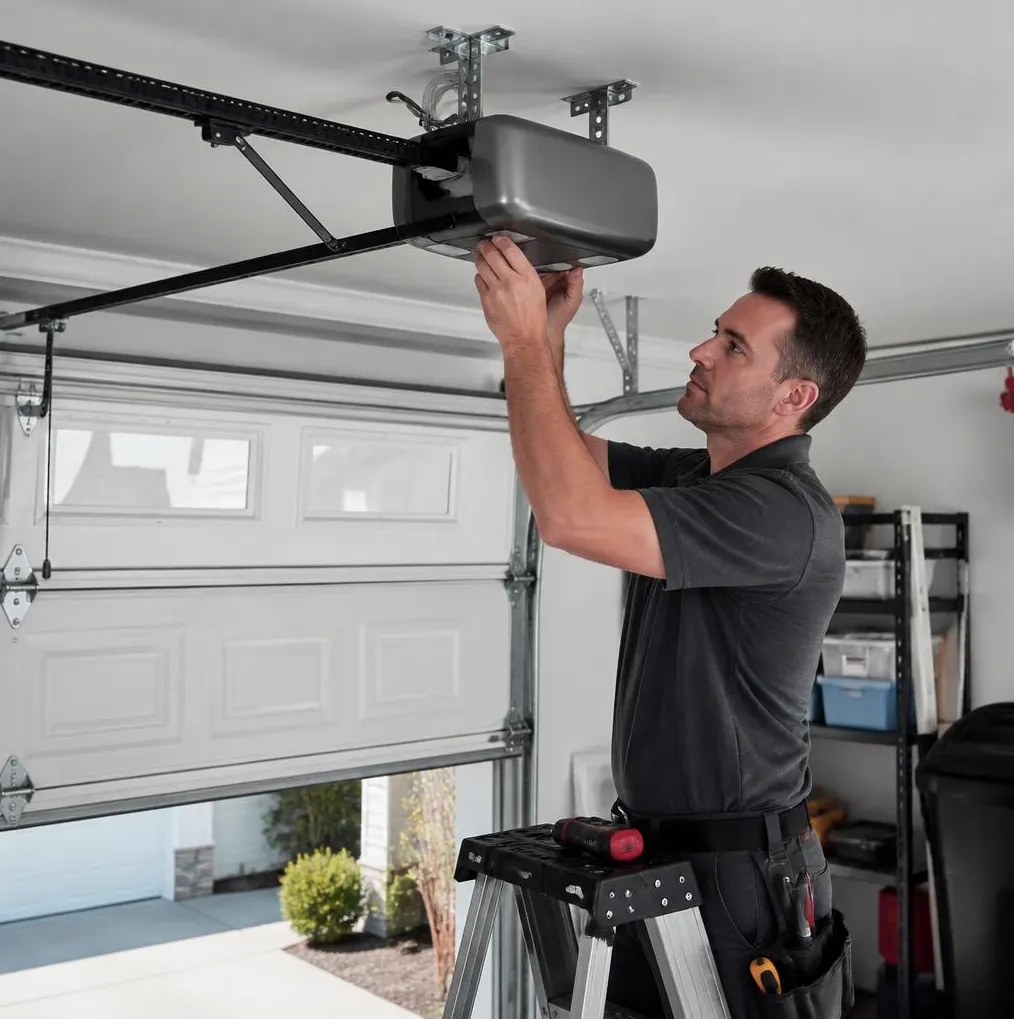
If your opener fails the auto-reverse test, if sensors won't hold alignment, or if the door feels unusually heavy or uneven when it moves, those are not do-it-yourself fixes—springs and sensor calibration involve real tension and real risk. Racine Garage Door handles Garage Door Opener Repair & Installation to restore proper auto-reverse and sensor function, and Spring Replacement done correctly and safely, with the right spring size and tension for your door. A seasonal Garage Door Maintenance visit before the hardest part of winter catches small issues—drifting sensors, worn cables, stiff hinges—before they become the kind of failure that puts a child or pet at risk.
If you're searching for a garage door company in Racine WI that treats this as a safety issue and not just a convenience call, reach out to Racine Garage Door. We serve Racine, Mount Pleasant, Caledonia, Sturtevant, Wind Point, Franksville, Union Grove, and Oak Creek, and we show up when we say we will. Call today to get your door checked before winter settles in.